Pages

Tuesday, February 3, 2026

Which scale?

I can't decide what Samurai miniatures scale I like better, either 6mm or 10mm.  I bailed on 15mm years ago due to I think cost and rules I thought I'd use.  As to 28mm, I just don't have any interest in Samurai skirmish.

What do you think?  6mm on left or 10mm on right.  Bases are the same size.

Well, so far from what I've read in the comments and who I've talked with in person, it seems like 6mm is the only choice.  I can certainly give 6mm a go again.  I am definitely not a fan of the plastic weapons breaking on the 10mm minis I have.

Sunday, January 25, 2026

Wargames Atlantic Samurai Sprues Challenge Solved!

Last year I struggled to easily remove 10mm figures from the Wargames Atlantic Samurai and Ashigaru sprues.  The weapons were breaking left and right.  I initially was using a hobby hobby knife or clippers and quickly gave up.  I then tried using a hot hobby knife.  There was some success, but too much ended up bending and melting too much of the weapons.  I had no solution to smoothly safely remove each set of figures so I shelved by boxes of Samurai and Ashigaru.


A year later I stumbled on fine hobby saws.  I suspect it was just chance while browsing Facebook or YouTube.  I had never used fine hobby saws before apart from using the Exacto Razor Saw that I've used for cutting wood.  I did some research on hobby saws and decided to give Tamiya Photo Etched saw blades a go.  The saws are supposedly 0.1mm in thickness with fine saw teeth.


It turns out using the Tamiya saw blades to slowly cut the figures from the sprues is the way to go.  Maybe I am late to the fine saw blade game, but I guess better late than never and I have reversed course on Wargames Atlantic Samurai sets.

Video describing how to use the saw blade:


Thursday, October 24, 2024

Age of Sail for me in 2024

I have had an interest in Age of Sail battles since playing in a few games with a friend of mine who ran Wooden Ships and Iron Men with 1:1200 ships back in the day.  I tried my hand at painting up 1:1200 ships, for War of 1812, from Langton Miniatures, but did not enjoy the rigging.  I bailed on this scale and more recently have had success with 1:2400 ships from Tumbling Dice.

Rules wise, I have struggled to find a good set for large battles that move along at a good pace and finish in less than four hours.  Below are the rulesets I've tried out.

  • Wooden Ships and Iron Men
  • Flying Colors
  • Far Distant Ships
  • Grand Fleet Actions in the Age of Sail
  • It is Warm Work
Rather than review each ruleset, I will say all the rulesets are good.  As mentioned I have been looking for a ruleset that runs faster that four people can command about six ships each.  I am currently going to move forward with It is Warm Work.  It has simplified the rules both firing and moving more compared to the other rules I've listed.  The firing has the most simplification, but still gets the same expected results.

The 1:2400 ships are easy to put together and paint.  Right now my ships are painted up pretty generically, and I hope to paint up some more unique colored ships.  I recently put together a YouTube video on how to paint the miniatures (see link below).


Wednesday, January 24, 2024

Homemade 28mm Corn Stalks

I was inspired by a blog post on John Bond's Wargaming Stuff blog on how to make your own cornfields for 28mm wargaming.  I have been hesitant to spend more on model railroad cornstalks (JTT 2" O scale).  They certainly look great but can get pricey for the amount of corn stalks I want to have on the table.  I have also not been very successful creating cornfields using other techniques, so I am giving John's technique a go.

I was surprised that John spotted a fake IKEA plant (FEJKA) that can be easily used as corn stalks.  I have an IKEA close by, so popped in there, bought the plant and have been trying out John's technique.  I tried to follow the process exactly, but ended up changing it up slightly.  I explain my process in the video below.  I bet there are more improvements other people will come up, but it is pretty easy and fast to go through this process.  Basing wise, I'm probably going to try out using rubber floor mat material.  I first saw it in action on Black Magic Craft YouTube channel: Link.

My video below on how to make these corn stalks.


I will post an update once I finish a cornfield terrain piece.

Link to John's blog post: John Bond's Wargaming Stuff

Sunday, August 20, 2023

Battle of Spion Kop, a Bloody Big Battles scenario

I was inspired to run a Boer War scenario from a wargaming friend who had been reading a book about the Boer War.  I have not run a Boer War battle in a long time so figured I'd give it a go again.  This time using the Bloody Big Battle rules.  It turned out the Spion Kop scenario would work out good because I had all the miniatures for the scenario painted up and based already.  This would also be my first foray into the Bloody Big Battles rules.  I played in a Franco-Prussian War game awhile back, but really couldn't get into the rules as a player.

In all the Bloody Big Battles scenarios, you will notice a lot of terrain.  They are not simple throw down a few terrain elements, these can be elaborate winding rivers to expansive hills.  I wanted to see if I could come with a way to simply create these features for this game and future games.  I don't want to spend a lot of time building fancy terrain when I will only use the setup for a couple sessions and then I'm onto the next battle with a different layout.  I also really don't have the room to store the terrain.

I have a lot of future Bloody Big Battles scenario options that I want to do in the future in periods I already have a lot of 15mm miniatures for: Crimean War, 1859 Franco-Austrian War, and Boer War.

The Spion Kop, Boer War scenario by Anton van Dellen is a good one.  I would drop the British artillery can not fire at a Boer target if a British unit is within 9", British artillery suffers a left shift because of Boer camouflage, and British artillery suffers low ammo if they roll a 10 or more.

It is certainly a challenge to figure out visibility between units when you have hills in the battle.  I need to build a diagram to explain when units can see each other and when they are blocked by contours.

In the playtest and at the club, the British has it hard.  I was able to get to a draw in the playtest.  The club game we only made it through half the scenario turns and the British were struggling to take any of the objectives.

Video on the terrain and setup of the Spion Kop scenario.

Video showing the results from each of the 8 turn playtest.


Tuesday, March 28, 2023

Battle of Midway with Miniatures?

Can the Battle of Midway be played with miniatures?  This was the question I posed to myself three years ago after running the Operation Pedestal Malta Convoy game.

I have since purchased a number of Midway boardgames and looked through the miniature rules I own.

Here are the boardgames related to the Battle of Midway I own:

  • Midway (1964)
  • Midway (1991)
  • The Battle of Midway, 1942AD
  • The Battle of Midway (HBG)
  • Victory at Midway (Command magazine)
  • Midway (Avalanche Press 1st ed.)
  • Battle of Midway (Louis Coatney)
  • Fires of Midway
  • Fury at Midway
  • Task Force: Carrier Battles in the Pacific

These are the miniature rules I've played or read through:
  • Nimitz/Halsey
  • Seekrieg V
  • Sea Wars Fleet Actions
  • General Quarters (1975)
  • Naval Thunder
  • Midway Campaign (David Manley)
  • Victory at Midway
  • Command at Sea
  • Find, Fix and Strike

The miniature rules were either too complicated or lacked a simple map.  I chose to not focus on miniature rules mainly because of wanting a good map system that boardgames offer.

After testing the boardgames each at least twice, I came up with three main criteria for what is key during the battle that has to be well represented in the game:
  1. Search for your opponents Task Forces.
    • Dice roll (or random chance) to see if search planes detect Task Forces.
  2. Damage to Midway by Japanese planes.
    • Midway has to see some sort of recordable damage from each wave of Japanese bombers.
  3. Damage to carriers.
    • Something more than just a two hit damage result to sink a carrier.
As you can see from my long list of boardgames, I have had not much luck finding a game that meets the three criteria above.  This was until I recently bought Task Force: Carrier Battles in the Pacific and played the Midway scenario.  It met all three and is a quality game.  Midway by Avalanche Press is good, but the damage to airfields rules is not great.  Victory at Midway and The Battle of Midway, 1942AD are not bad.  I recommend Task Force: Carrier Battles in the Pacific by Vucasims.  I look forward to trying out the non-Midway scenarios (i.e. Battle of the Coral Sea).

Task Force rules Midway scenario.  Japanese and Americans can not 
deploy closer to Midway than their corresponding lines on the map.

Recently the Nimitz/Halsey rules by Sam Mustafa was published.  There are two rules published together in one PDF.  Nimitz is the surface miniature rules and Halsey is the campaign level rules.  The Halsey rules is also recommended for the Battle of Midway.  There is even a Midway scenario included.  I think the Halsey rules have an edge over Task Force: Carrier Battle in the Pacific when it comes to the display/use of miniatures.

Halsey Midway scenario map.

Ship Miniatures:

Looking at the Order of Battle for the Midway naval campaign there is a large number of Japanese and American ships involved.  The focus of the battle mainly involved the Task Forces of four Japanese carriers and the three American carriers.

GHQ 1:2400 miniatures would look great, but a bit too expensive for me.  I can see myself buying 1:3000 miniatures to use in conjunction with the previously mentioned rules.  1:6000 miniatures are just too small.  I recommend 1:3000 ships (i.e. NAVWAR).

Air Miniatures:

I have used 1:600 for some recent naval battles.  I have found that this scale is a good one to use for either 1:2400 or 1:3000 ships.  I recommend Tumbling Dice Miniatures and Pico Miniatures for 1:600 WWII planes.

Conclusion:

The Battle of Midway is doable using a map system with miniatures.  I think the real question is, does it make sense running the historic battle?  It is tough for the Japanese to win.  The U.S. reconnaissance is a lot more extensive than the Japanese.  The Japanese have a very low probability of spotting the U.S. carriers before they are spotted.  I have no problem putting together the scenario.  I would enjoy painting up the ships and solo playtesting through the scenario.  Would actual players be okay playing the Japanese and be ready for losing all their carriers?  Maybe I would have to run the Japanese and two or three players play the U.S. Task Forces and Midway island.

Wednesday, February 22, 2023

Russo-Polish War 1919-20 playtesting

Recently I acquired 15mm Russian Civil War (RCW) painted and based miniatures and have been looking at using them for a game.  Before I acquired these miniatures I have had some interest in the RCW and also the Russo-Polish War of 1919-20.  Having just read a second book on the Russo-Polish War I was inspired to test out some WWI rules.  In the past I used the Big Table Little Men rules for a battle in WWI Palestine, but this time I wanted a different ruleset for the RCW and Russo-Polish War.

Here is the list of rules I have read through or playtested as options for Russo-Polish War:

  • Through the Mud and Blood
  • Trial by Fire
  • Great War Spearhead 2
  • If the Lord Spares Us
  • Red Actions! the Pygmy Wars Version
  • Return to the River Don
  • It Rolls for Ivan
  • Triumph of the will
  • Big Table Little Men
Rather than explain why I did not pick each ruleset, I'll just focus on the ruleset I picked.  I don't think any of these rulesets are bad.

I chose Trial by Fire by M Batuhan Tuncdemir.  I was not familiar with these rules, I think I just stumbled on it.  I was looking for a ruleset that was not complicated, uses my existing based miniatures, does not end up with a lot of markers on the table, games conclude in less than four hours, and of course is fun to play.  I will have to try out these rules for WWI Mesopotamia.  The free rules can be found on the official blog or Facebook page.

The scenario I have been testing has Polish infantry and cavalry defending a town against Russian infantry and cavalry.  Some field artillery is sprinkled in on both sides.  Below you can see what my playtest looks like.

Russians advancing on the Polish positions.

A good book on the history of the Russo-Polish War mainly from the military aspect is Warsaw 1920 by Adam Zamboyski.  It is an easy read that gives a good overview of the conflict.  There is not a lot of books on the war in English and this is a good addition that I recommend.  Do not be fooled by the title of the book, most of the book covers more than just the defense of Warsaw.

To get you in the era of the conflict, here are some good music to listen to:

Polish Patriotic songs


Saturday, October 22, 2022

First Acrylic Painted Unit

It may be surprising, but I have never painted a complete infantry unit in acrylics.  I have always used Humbrol or Testors enamels, but this time I thought I'd give Vellejo acrylics a go for a 28mm unit of French in the French and Indian War.

The 28mm miniatures are AW Miniatures.

I purchased the Painting War book on the French and Indian War and attempted to use the recommended paints and technique.  I failed completely trying the technique (base and two highlights) and using the recommended paints.  I stuck with the acrylics, but instead chose some of the recommended paints.  I seem to like the look of a base coat with a wash.

My process:
  • Black primer.  I may switch to a grey primer.  I typically use a grey primer.
  • Base coats.
  • Selective wash in areas.  I use Strong Tone by The Army Painter.
  • Highlight in selective areas, which can be a base color or other.
  • Basing.
First try at this, so I guess I can only get better.


Saturday, March 12, 2022

My Hobby Loss

Today I learned that someone who was instrumental in my start into the miniature wargaming hobby passed away.  His name was Andrew Powter.

My Dad worked with Andrew before he retired.  At the time Andrew was a miniature painter himself.  He was not a wargamer, but enjoyed painting.  As a kid, I was using the old testors paint on plastic model plane kits and Andrew recommended to my Dad to switch to Humbrol paints.  When I was 13 I was invited to play a miniatures game with Andrews son who is a little younger than I am.  The game was a Sword and the Flame rules Zulu game.  We played the game twice each playing both sides.  We played with 1:72 plastic figures.  I was hooked.  I can still remember the games.  Soon after I had my own set of the rules and bought and painted up all sorts of Zulu war plastic figures.  That day was my entry into the hobby.

I have Andrew to thank for helping with my painting and getting me started into the wargaming hobby.  I am sad to hear of his loss to parkinson's disease at the age of 75.  In life and our hobby, we lose people close to us.  Andrew was someone who was instrumental in my miniature wargaming hobby aspect of my life.  Thank you.

link to obituary:

http://ip51.icomos.org/~fleblanc/in-memoriam/powter-andrew/im_powter-andrew.html

Friday, December 3, 2021

6mm Samurai: New to 3D Resin Miniatures

When it comes to acquiring 3D printed miniatures, in the past I have purchased just from Shapeways.  There are now a lot more options available in the market.  You can now print a file yourself or have someone else print it.  I have no interest in purchasing a 3D resin printer and do not have a friend who has one.  I wanted to research how someone like me did it.  I tracked down a post on the subject.


For someone who knows very little about 3D printers I impressed myself.  Certain key steps for someone who does not own a 3D resin printer (i.e. myself):

  1. Find 3D miniature files (STL) for free or purchase.  I purchased the 6mm Samurai files from Project Wargaming.
  2. Choose a manufacturer.  A web site like treatstock.com can help you find a manufacturer.
  3. Expect misprinted figures or breakage.
  4. Once figures are received, you may have to remove the supports yourself.
Here is a 34 minute video on my take on going through the process of acquiring 3D resin miniatures with some recommendations:


Monday, November 15, 2021

Veterans Wars 2021

Last weekend our club had our Fall club convention.  We had three to five games for each session on Saturday or Sunday.  There were about 15 people attending Saturday and close to 40 on Sunday.  I thought Saturday was a little disappointing attendance wise, but a lot of people were busy (i.e. attending an old club member memorial service).  I ran my Korean War game Saturday morning and it ran very well.  Overall I think everyone had a good time.  It was good to see everyone at our latest club convention.

Convention photos:

Click photo to view 360° Wings of War photo


Click on photos below to pull up 360° view


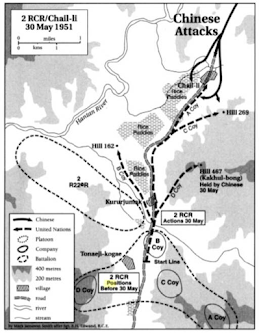
Cold War Commander, Korean War: Battle of Chail-li

In December 1950, the first Canadian troops arrived in Korea.  Further troops arrived in May 1951.

On May 30, 1951, Canadian forces moved into the town of Chail-li, and were quickly attacked by Chinese forces.  Due to the large Chinese attack on Chail-li, the Canadians were forced to retreat.

I have put together a Cold War Commander scenario of the battle using 10mm Pendraken miniatures.


Pendraken has Chinese and British miniatures for the Korean War, but the British hats were not correct for the Canadians.  I customized the hats to better match what the Canadians were wearing in Korea.

To read about the historic battle click on think link: 

Tuesday, September 14, 2021

6mm Samurai: Primer and Basing options

Since I am new to painting 6mm and Samurai miniature wargaming, I have been researching various approaches to painting and basing.  I thought I'd share my thoughts on these topics in two videos.

The first video focuses on using grey, black or black with grey drybrush as options for priming.  I did a test for each and then share which I chose.  Typically I just use a grey primer for painting miniatures.

The second video discusses what basing I chose for the two wargame rules I'm going to game with.  At the end I go into casualty marker options as well.

I think my next video will be on how I do the sashimono flags and other flags.  The sashimono flag is the banner on the backs of the samurai and ashigaru.


Video looking at priming options.


Video on basing options for two rulesets I've chosen.


Saturday, August 14, 2021

6mm Samurai: 2D6 vs Baccus


I have chosen to dive back into Samurai miniature wargaming again.  I didn't get too far last time with 15mm.  I have always been a big fan of the Samurai period in Japan, but I think the quantity of 15mm I needed to paint up for Killer Katanas rules basically did me in.

I saw the Commands and Colors: Samurai on GMT P500, so decided to put in an order.  I figured it had a lot of good scenarios and maybe could be used with miniatures, like I've seen with other Commands and Colors games.

Rather than 15mm, this time round I am giving 6mm a go.  I went with the 2D6 6mm Samurai Kickstarter that included their ruleset.  I like the detail in the miniatures, but not a fan of how brittle they are.  I figured I should give Baccus a go, so I ordered their Samurai Army pack.  This would give me a good variety of miniatures to paint up.  From what I see so far, they look good.  I will probably focus on just the Baccus, but might fill in a few with 2D6.

I decided to make a video comparing the two companies 6mm Samurai side by side.


Thursday, August 12, 2021

My Game History by Period Graphed

Have you ever wondered what games you've run by period of time looks like?  Well, I had that thought today and decided to plot the games I've run.  This represents the past 25 years of miniature games I've put on at home, a club or convention.

As you can see, I seem to focus on the period from ACW to WWII.  Most of my 1860s-70s period games have been ACW.  I guess my wargaming is approximately hundred years from the 1860s to the 1960s.

Monday, June 14, 2021